Language Arts

Language of God for Little Folks (Level B)

Book cover: 'Language of God for Little Folks (Level B)'
Author(s): 
Nancy Nicholson
Subject(s): 
Grade / Age level: 
Resource Type: 
Copyright: 
2005
Review: 

This simple and charming Catholic workbook provides basic explanations, practices and reinforcement of basic grammar concepts for the third grade. Students practice identifying sentence parts and complete sentences, capitalization, using question marks and "asking words", sentences that command or exclaim, synonyms, antonyms, homonyms, nouns and proper nouns, capitalizing God's the names of God and special titles of Our Lady, singular and plural, possessive nouns, action verbs and "state of being" verbs, past and present tense, helping verbs, verbs that change form, subject and predicate, roots and verb endings, prefixes and suffixes, contractions and abbreviations, syllables, adjectives, pronouns, titles of respect, alphabetizing and the dictionary.

The text includes pen and ink illustrations, Catholic poetry and a complete answer key.

Publisher: 
Catholic Heritage Curricula
Binding: 
Spiralbound
Perspective: 
Catholic
Number of pages: 
127 pages
Additional notes: 

Copyrights 1999/2005

Review Date: 
2-3-01
Reviewed by: 
TitleSort: 
Language of God for Little Folks (Level B)

Language of God for Little Folks (Level C)

Book cover: 'Language of God for Little Folks (Level C)'
Author(s): 
Nancy Nicholson
Subject(s): 
Grade / Age level: 
Resource Type: 
Copyright: 
2008
Review: 

Language of GOD for Little Folks - Level C, is Catholic Heritage Curricula’s grammar program designed for the third or fourth grader. It is a complete program in a spiral bound workbook and does not require any additional text or teacher’s manual. The program focuses on gradually building language skills. These skills are very naturally presented within the context of the Catholic faith. Topics covered are sentence parts, nouns, verbs, adverbs, adjectives, pronouns, commas, apostrophes, tense, and subject- verb agreement. These topics are all covered in a slightly more challenging manner than in the previous levels.

We have been using CHC’s Language of God program for two years. It presents the information in a regular and comprehensive manner without being needlessly repetitive. Each topic is introduced and the child has the opportunity to practice the necessary skills with reviews included every few lessons. We normally supplement the exercises by discussing the concepts as they apply to our literature and writing assignments. The program is designed to be easy on the teacher and easy on the student without sacrificing quality (speaking plainly, it is easy for me to call out, “Start your grammar.” while attempting to redirect a mischievous toddler and my eight year old begins the lesson joyfully). Furthermore, it teaches grammar while focusing on the ultimate goal of salvation. In the very first lesson it is necessary to read through and discuss several passages from the Gospel. This is a very balanced program for the Catholic home schooler.

Publisher: 
Catholic Heritage Curricula
Binding: 
Spiralbound
Perspective: 
Catholic
Number of pages: 
143 pages
Review Date: 
6-24-09
Reviewed by: 
TitleSort: 
Language of God for Little Folks (Level C)

Lingua Mater

Book cover: 'Lingua Mater'
Author(s): 
Margot Davidson
Subject(s): 
Grade / Age level: 
Resource Type: 
Copyright: 
2005
Review: 

This is a complete English program written for 7th grade, but can easily be adapted for 6th and 8th graders as well. Although it is written to be used in one year, the author has given details of how it can be broken down into a two year program.

Margot Davidson has taken beautiful Literature pieces, paintings and poems, and incorporated them into a program to teach English. By using narration, copy work, Literature analysis, discussion, and grammar, your child will come away with an understanding of how sentences, paragraphs, poems and stories are put together. The approach is gentle yet the writing assignments require higher order thinking than any comparable English program on the market. Lingua Mater would be a wonderful next step for those using Primary Language Lessons, Intermediate Language Lessons or Stories with a View. Lessons are perfect for your Middle School child and the text is a wonderful preparation for the High School years which will require more in-depth analysis and writing.

The student book is broken down into four Units and each Unit has nine weeks. The student book is not meant to be written in, but there is permission for you to photocopy for your own family. (Or you can purchase the supplement from Hillside Education, which has all the work done for you, photocopies would cost you much more.)There are rubrics to help you determine your child's writing abilities and checklists for your child to use himself to evaluate whether he has completed his writing assignments accordingly. The teacher's guide is wonderful and includes examples of the types of answers you are looking for from your child's grammar and discussion work.

Hurray to Mrs. Davidson for putting out a product which will be a treasure to Catholic home school parents for years to come!

Publisher: 
Hillside Education
Binding: 
Spiralbound
Perspective: 
Catholic
Number of pages: 
306 pages
Review Date: 
6-7-05
Reviewed by: 
TitleSort: 
Lingua Mater

Little Angel Readers

Book cover: 'Little Angel Readers'
Author(s): 
Linda Bromeier
Subject(s): 
Grade / Age level: 
Review: 

The Little Angels Series are four soft cover readers that teach all phonics sounds using word drill pages and phonetic stories. It teaches letter-sound relationships systematically, beginning with the easiest letter sounds. The word drill pages provide practice in decoding words containing the letter sounds. The stories with phonetically-controlled vocabulary follow each word drill page. They provide practice in decoding words in context and build comprehension skills. The stories are about Catholic family life, Bible stories, and Saint stories as well as fables and folk tales. The illustrations are well done and many are in color. Review pages are provided at regular intervals.

The workbooks are consumable and accompany the readers. They reinforce the lessons from the readers with exercises in phonics, vocabulary, reading comprehension and handwriting.

The Teacher's manual provides detailed lesson plans and suggestions for related activities. The manual provides daily lesson plans for teaching the entire series. The lessons cover reading readiness, phonics, listening skills, vocabulary, handwriting, comprehension and spelling. There are also multi-sensory activities included to accommodate children who have different learning styles. The pace is very flexible so you progress at *your* child's speed. The manual also contains progress test after each review to assess how well your child is doing.

Sequence of Phonics Reader A - Consonants, short vowels Reader B - final blends, -ed, -ing, long vowels, two-syllable words Reader C - Beginning consonant blends, Y as a vowel, Consonant digraphs, R- controlled vowels Reader D - vowel digraphs and diphthongs, soft c and g, Irregular sounds and spellings

The author holds a MEd in Reading from the University of Missouri-St Louis and is certified in Learning Disabliites. She has six years classroom experience and nine years experience in home education.

I am using the Little Angels in place of the MCP phonics that Seton sends with their First Grade Curriculum. If you need something for Kindergarten, with beginning sounds and letter recognition, I highly recommend Seton's Kindergarten Phonics for Young Catholics. I have had great success with the Little Angels series with my daughter who is now finishing Reader D. She is 8 years old. My son who is 7, could not wait to start the readers and is also on Reader D. The Little Angels Phonics Series is really a wonderful tool for teaching your children to read.

Publisher: 
Stone Tablet Press
Review Date: 
2-10-01
Reviewed by: 
TitleSort: 
Little Angel Readers

Little Folk's Letter Practice

Book cover: 'Little Folk's Letter Practice'
Author(s): 
Nancy Nicholson
Subject(s): 
Grade / Age level: 
Copyright: 
1997
Review: 

We reviewed Little Folks' Letter Practice. We found this to be very simple. For our child this was too easy for K level. It is basically for the Pre-K level. It has pages that are of coloring book quality. We photo copied the pages to make them easier to write on with a pencil. The letters of the alphabet are one to a page with a trace and write page following each letter. The pictures with each letter try to complement our faith. The introduction offers creative advice for the use of the book. The last 5 pages of the book encourage the child to sound out words. There are four or five possible words in a column. A blank has been left in front of each word, such as 'an'. Pictures to the possible word are in the right hand column to assist the child in the discovery of the word. The child will need to sound out the word in the column look at the pictures such as 'man' and write the consonant. There are no difficult words to sound out. All words are only three letters such as 'man', 'cat', 'mop', etc. This is a nice book for becoming familiar with the alphabet.

Publisher: 
Catholic Heritage Curricula
Binding: 
Stapled Softcover
Perspective: 
Catholic
Number of pages: 
62 pages
Review Date: 
1999
Reviewed by: 
TitleSort: 
Little Folk's Letter Practice

Little Stories for Little Folks

Catholic Phonics Readers
Book cover: 'Little Stories for Little Folks: Catholic Phonics Readers'
Author(s): 
Nancy Nicholson
Subject(s): 
Grade / Age level: 
Copyright: 
2004
Review: 

Little Stories for Little Folks is a Catholic phonics readers set that offers an inexpensive alternative to the Bob Books. The entire Bob Books set (5 sets of booklets retailing for approximately $15 each) costs about $75 retail. In contrast, Little Stories for Little Folks costs about $25 for the whole program. While the Bob Books and other readers might turn out to be helpful for some families (and are available at some libraries), many families have been very grateful for this charming Catholic set at such a good price.

The Parent's Guide offers steps to prepare your child to read by using the enclosed flashcards (printed on card stock) to gain letter and sound recognition and then proceeding to work on pre-reading blends (with the pre-reading sound blend sheets that are included in the program and printed on card stock). After these steps are accomplished, the child will be ready to proceed to the phonics readers. The parent's guide also offers discussion questions to help your child get more out of each story.

There are four sets of readers, each set being identified by its own color. The booklets and flash cards come as an 8 1/2 x 11 pad. Each booklet starts out as a regular-sized piece of paper which you fold into four to form a child-sized booklet.
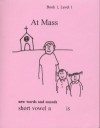
Level 1 contains 15 booklets. The story titles are: "At Mass", "Stop! Hot Pot!", "Sad Nip", "Mud on the Rug", "The Hot Pup", "Mom Gets Help", "The Rat", "Little Ann", "Bat the Ball", "Funny Ann", "The Campers", "God With Us", and "Messy Room".

This set starts with simple words such as "pat" and "sat" and progresses slowly to more complex words like "tent", "small" and "under".
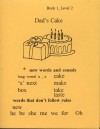
Level 2 contains 10 booklets. The story titles are: "Dad's Cake", "Mrs. May is Sick", "Mike's Bike", "Visit the Sick", "We Hope to See the Pope", "The Little Goat with No Sense", "The Cold Rain", "Feed the Hungry", "The Tease", and "Noon Potluck."

This level starts with words like: "cake" and "taste" and progresses to words like "salad", "baby" and "table".
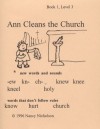
Level 3 contains 10 booklets. The story titles are: "Ann Cleans the Church", "Blessed Sacrament", "St. Paul", "A Toy for a Boy", "At the Beach", "The Found Rosary", "Run the Race", "School, Where?", "The Quake", and "I Didn't Know".

The starts with words like "kneel" and "holy" and progresses to words like "receive" and "neighbor".
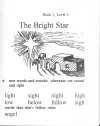
Level 4 contains 10 booklets. The story titles are: "The Bright Star", "The Caught Calf", "Mr. Brown's First Holy Communion", "Kim's Adoption" (in two parts), "In the Match Box", "Badge Fudge", "Squirt", and "Our Lady's Secret".

This level starts with words like: "night" and "follow" and progresses to words like "cheerfully" and "enough".

Publisher: 
Catholic Heritage Curricula
Binding: 
Softcover
Perspective: 
Catholic
Additional notes: 

Set contains:
22 page softcover parent's guide, set of 45 booklets, 47 flashcards

Copyrights 1998/2004

Donated for review by Catholic Heritage Curricula

Review Date: 
11-18-02
Reviewed by: 
TitleSort: 
Little Stories for Little Folks

Little Stories for Little Folks

Catholic Phonics Readers (additional review)
Author(s): 
Nancy Nicholson
Subject(s): 
Grade / Age level: 
Copyright: 
2004
Review: 

Our third child, now a deep voiced high schooler towering me by several inches, learned to read with me when he was five years old using these little folding readers. This new edition has a new cover and some additional materials, but the readers themselves are the very same I used ten years ago! He looked at these the other day and could remember many of the stories.

The bulk of this program consists of four levels of readers that we tear out and fold in four. I made color coded envelopes out of construction paper ten years ago, the same envelope I am using with our youngest this year. I tucked the envelopes in a pocket folder, and as we folded and read each little book, it was neatly stored.

The little books follow a simple sequence of phonetic sounds, beginning with the "short a" in the first title At Mass. What we like about these is the fact that we begin from day one reading a little story. None of my children enjoyed very much reading pages of words in other readers. These have a few new words displayed on the little book's cover, but each little book is one independent whole story. These mini-stories are delightfully Catholic, and succeed in being at the same time funny and suspenseful enough!

This latest edition has a nice new glossy cover and several cardstock pages with phonics strips and illustrated phonetic sound cards to cut. Silly Willy Sentences strip are also included, introducing basic syntax concepts. A separate Parent's guide booklet is included, with simple guidelines for teaching to read with this program, and booklet-by-booklet directions for introducing the new sounds and words.

Publisher: 
Catholic Heritage Curricula
Perspective: 
Catholic
Additional notes: 

4 levels, 45 stories to fold into booklets, bound Parents' Guide, Silly Willy Sentences activity, and Catholic flashcards on stiff cardstock

Review Date: 
3-15-2007
Reviewed by: 
TitleSort: 
Little Stories for Little Folks

Pamela Walks the Dog

Author(s): 
Christine Marlin
Subject(s): 
Illustrator(s): 
Hilda van Stockum
Grade / Age level: 
Resource Type: 
Copyright: 
2001
Review: 

This latest title in the Bethlehem Books Lamb Time series is a short but sweet (and very funny) story about a busy little girl going through the very important and imaginative process of getting ready to walk the dog. Any parent with small children will appreciate the humorous truth about how children are that the author so clearly understands, even in such a simple story. This shouldn't surprise fans of the author's grandmother and the book's illustrator, Hilda Van Stockum, whose own books portray a beautiful understanding of small children.

My two reading-age children (ages 6 and 8) so enjoyed the punch line that they fought over who would be the first one to read the story to Daddy. As evidenced from the sticky fingerprints on every page, my younger children (ages 2 and 4) have been poring over the book as well. The story could be easily read by a younger reader who knows most of the phonograms (the story includes a few "challenging" words, such as "thought" and "would").

Publisher: 
Bethlehem Books
Binding: 
Sewn Hardcover
Number of pages: 
24 pages
Review Date: 
12-1-01
Reviewed by: 
TitleSort: 
Pamela Walks the Dog

Peterson Directed Handwriting

Grade 1 Complete Kit
Author(s): 
Rand H. Nelson
Subject(s): 
Grade / Age level: 
Review: 

I noticed pretty early on that my boys did not have the same facility with writing as I myself had had as a child. All of them have learned to read long before they could write anything legible. And even when they learned to write, their handwriting left much to be desired. I tried various programs, and even made extra worksheets on the computer, but nothing really seemed to help much. Friends advised me – some said to make them practice more; others said to just wait for them get older. But as they got older, their writing got faster – but worse. I despaired of their ever developing fluency.

Then a friend (a mother of boys!) introduced me to the Peterson Directed Handwriting program. Of course I wondered why this program would work where those others had failed. There’s a lot more information on their website but here are some basic differences between a typical handwriting program and the Peterson program.

  • Nearly all handwriting programs are based on a visual-feedback approach. In other words, the child sees the model, tries to copy it, sees the difference and attempts to correct it. This has two inherent problems:
    1. Constant correction results in stopping and restarting at random places, preventing the development of a smooth writing stroke.
    2. Like copying a drawing, it is by its nature brain-resource intensive.

    Peterson is based on training the muscles, freeing up the brain to focus on the content, spelling, etc.

  • While other programs are for the most part simply given to the child, Peterson requires active teaching. Don’t worry – this only takes 5-10 minutes per day and it’s all spelled out for you in the teacher’s guide.
  • Peterson also places significant emphasis on the surrounding mechanics, such as pencil holding (they carry special pencils and grippers to help with this), paper positioning, and proper posture.
  • It uses rhythmic movement and large muscle movement to help train fluent motions.
  • Finally, it is non-consumable.

If your child is writing easily and beautifully (and yes, I have seen this in some children) then you don’t need this program. However, if your child displays one or more of the following behaviors, it is a clue that this program may help:

  • letterform reversals (confusing b and d, for example)
  • stroke reversals – letters that look correct but are formed in the wrong direction
  • incorrect or inconsistent stroke patterns
  • excessive pressure of pencil on paper
  • neat handwriting if given LOTS of time, but legibility problems under time pressure
  • handwriting deteriorates over time

The way the program works is by breaking down each letter and number into a series of strokes, for both print and cursive letters. After teaching the basic strokes, the letters are taught in groups based on their form, i.e. the strokes of which they are composed. A typical lesson involves a large model on the chalkboard with the teacher naming the strokes and identifying the start and stop points. The students then “air write” the form by pretending to trace the model while chanting the stroke names. This is followed by finger-tracing the letter in the student book, and only then attempting to make the letter on paper. Eyes closed practice is encouraged, and it helps if the student can use the chalkboard for practice as well.

I won’t say my boys are writing spectacularly, but the older (now 12) can write legible pieces in reasonable timeframes.

Peterson Directed Handwriting is available in Homeschool Kits in five levels, covering grades Preschool/K through 8. They also offer two Adult Self-Improvement levels, the first of which is excellent for as-needed refreshers in middle or high school.

Publisher: 
Peterson Directed Handwriting
Binding: 
Softcover
Additional notes: 

Most of the booklets are stapled softcover, with the exception of the Preschool / Kindergarten ABC - 123 book, which is spiralbound.

Review Date: 
1-21-2008
Reviewed by: 
TitleSort: 
Peterson Directed Handwriting