No name

Sample Pages from [em]The Curé of Ars[/em] by Mary Fabyan Windeatt

Chapter One

Shepherd Boy

My name is John, and I have been dead since August 4, 1859. How happy I am! For my soul is in Heaven. Yes, for eternity I am privileged to see God... For endless eternity I enjoy a happiness that is beyond the power of mere words to describe. And nothing can ever take this happiness from me! Or from my friends - the millions of men and women and boys and girls who are with me in Paradise! For the joy we have is everlasting. It is eternal. God has said so, and of course He cannot lie.

It was not easy to win this joy. When a soul comes into the world, the Devil tries very hard to drag it down to Hell. So it was with nearly everyone who is in Heaven today, the chief exceptions being those who died shortly after Baptism - babies and very small children. But I - well, my life on earth lasted for more than seventy-three years, and many, many times during that period the Devil tried to discourage me in my efforts to please God and to win the place which He had prepared for me in Paradise.

Did he succeed? Of course not. And why? Because of the wonderful courage God gave me whenever I called upon Him. For in my day (even as in any day) whenever there was a temptation to do wrong, to go over to the Devil's side and give up the struggle to win Heaven, God was always ready with His grace. Since He wills that every soul in the world shall someday enjoy the good things of Heaven, naturally He does not withhold the means to obtain them. But what a pity that so few people understand this, and that when trials and temptations come they never think of asking God for the grace to remian true to Him. Because of such neglect, the struggle against the Devil is generally far harder than it needs to be. Many times, alas, it even ends in defeat--in Hell, with all its terrible darkness and misery and pain.

My struggle to outwit the Devil and to win Heaven (although it was some time before I really understood about such thigns) began on May 8, 1786, in Dardilly, a village not far from the city of Lyons, in France. My parents, Matthew Vianney and Maria Beluse, already had three children: Catherine, Jane and Francis. But they were delighted to have still another, and on the same day that I was born I was taken to the village church to be baptized. Here I was given two names: John, in honor of Saint John the Baptist, and Marie (the French form of Mary) in honor of the Blessed Virgin.

"I wonder what little John Marie Vianney will be when he grows up?" some of the neighbors asked one another thoughtfully. "He seems to be a fine, strong boy."

"Why, he'll be a farmer like his father," was the general opinion.

The reply was certainly a natural one. For generations my people had tilled the soil. What was more likely than that I should follow in their footsteps? And follow in their footsteps I did, at least during the early years of my life. Of course my tasks were just simple ones at first, such as feeding the chickens, gathering the eggs, weeding the garden. But when I was seven years old my father made an important announcement.

"John, I think you're big enough now for real work," he said. "Tomorrow you may take the sheep to pasture."

How happy I was at this new responsibility! My brother Francis, two years older than I, had been in charge of the flocks for some time. Now I was considered trustworthy enough to take his place. Now I would be allowed to be away from home all day, seeing that the sheep found good grazing land, that they did not stray into neighbors' fields, that they came to no harm from other animals. And if I did my work well, nine-year-old Francis could be spared for still other duties on the farm.

So it was that I became a shepherd. Frequently my little sister Marguerite (who was seventeen months younger than I and whose pet name was Gothon) accompanied me into the fields. Then, when the sheep were peacefully grazing, we played games with neighboring shepherd children who came to visit us. However, there were many days when the other children did not come. At such times Gothon and I played by ourselves or knitted stockings.

Perhaps to children in America it may seem strange that a boy should know how to knit. In my day this was not considered strange at all. Every country child was expected to make hismelf useful, even when he was quite small. And since we were very hard on our stockings, our mother taught us how to make new ones with the wool from our own sheep.

I had been born in 1786. Shortly afterwards, many political disturbances arose throughout France. In the year when I was given charge of my father's flocks, godless men had long been in control of the government. Churches and monasteries were closed. All priests and nuns who acknowledged the pope as Head of the Church were hunted down as though they were wild beasts, and cruelly murdered. Finally, unless one were willing to pay with his life, it was no longer possible to attend the Holy Sacrifice of the Mass, or to receive the Sacraments.

"Children, our cuontry is being punished for its sins," said my mother sorrowfully. "Oh, what a dreadful thing it is to offend the good God! See what hardship and pain it brings, even to the innocent!"

I was just a seven-year-old boy, but my mother's words made a deep impression on me. And I was even more grieved when I heard that there were priests who, to protect themselves, had sworn to uphold the new government. These continued to say Mass publicly, although of course no good Catholic would attend.

"There are many brave priests, though, who refuse to have anything to do with the wicked government," my mother told us. "They are in hiding."

"In hiding?" I asked curiously, not quite understanding what this phrase meant.

"Yes. They dress like farmers or peddlers or tramps. But they are priests just the same. Perhaps it will be possible for us to go to their Masses."

For several years we managed to do just that. Late at night (as though we were bent on committing some great crime) we would creep from our beds and walk the mile or more to the barn or farmhouse which had been selected as a meeting place. All of us children were sworn to the utmost secrecy, and never would we have dreamed of mentioning to any stranger what we were doing or where we were going at that hour of the night without so much as a candle or a lantern to guide us over the rough country road. We would rather have died than betray the whereabouts of a priest who had remained faithful to the Pope, and who that very night would hear Confessions, offer Mass and give Holy Communion to his little flock.

Of course I was all eyes and ears when we finally reached the makeshift church--especially for the priest, who was risking death to bring us farmer folk the consolations of our Holy Faith. What a brave man he was! How wise! How holy! And yet in appearance he was just like anyone else...

"But he isn't just like anyone else," my mother whispered. "Even in Heaven he will be set apart from other men."

And then as best she could, she explaiend about the priesthood--how it is a supernatural state of life to which God calls certain men, so that they may become channels for His grace. Through these men, who take the place of Christ on earth, God pours forth His love and mercy. Through them He receives the greatest prayer the world can ever know - the Sacrifice of the Mass. Through them He takes away the stain of Original Sin in Baptism, in Confession forgives any sin it is possible for man to commit, in the Holy Eucharist gives Hismelf as food to struggling mankind, and in Confirmation sends the Holy Spirit to help souls profess and spread the Catholic Faith. Through priests He unites men and women in the holy partnership of marriage, prepares the souls of the dying to enter into eternity, and in Holy Orders gives the same powers to other men, so that the priesthood will last as long as the world itself.

I often thought about my mother's words. How wonderful to be chosen by God to be a priest! How fortunate were those boys who, having received the call, had the chance to study the many things necessary to fulfill this vocation! So carried away was I by such thoughts that before long an idea for a fine new game had presented itself. I, seven-year-old John Marie Vianney, would make believe that God was calling me to be a priest. Even more. I would not be simply a student. I woudl be already ordained. I would have the right to preach and to conduct church services.

Witha little coaxing, Gothon and the other shepherd children joined in the new pastime and agreed to be my congregation. Thus, each day while the sheep were peacefully grazing, we said the Rosary, sang hymns and marched in procession through the fields behind a makeshift cross. Later I preached a sermon - but only a short one, because my listeners were not partial to long speeches. Occasionally we also gathered before a little clay statue of the Blessed Virgin which I had made (I kept it hidden in a tree turnk near the brook) and decorated it with moss and wildflowers.

So the years passed - 1793, 1794, 1795. Religious persecution still went on in France, and although certain loyal Catholic families managed to attend Mass, they still had to do so in secret. As a result, it was impossible for us younger country children to make our First Confessions, or to receive Holy Communion, since there was no way for us to have regular instructions from the various priests who moved from one village to another under constant threat of death. Indeed, I was eleven years old before I went to Confession, and thirteen years old before I received my First Communion.

Probably this great even woudl have been postponed even longer had I not been able to spend some months visiting Aunt Marguerite, my mother's sister, in the neighboring town of Ecully. Here lived several priests (although a stranger would have taken one for a cook, another for a shoemaker, a third for a carpenter, so successfully had these servants of God disguised themselves in order to escape capture by the police). These were also two good women in Ecully who had been nuns in the Cognregation of Saints Charles before the government had driven them into exile.

"My nephew John Marie has never been to school," Aunt Marguerite told these faithful souls. "Do you suppose you coudl teach him a little reading and writing? And something about Catechism?"

Father Groboz (who worked as a cook) and Father Balley (who worked as a carpenter) agreed to do what they could for me. So did the two women who had been nuns.

"John Marie may join the First Communion class," they said. "There are fifteen other children already enrolled."

The time and place for the meetings of the First Communion class were as secret as those for the Holy Sacrifice, and the danger was as great for both teachers and pupils. For instance, what would happen if the police came when we were studying our Catechism? How could we explain why we were gathered there? Suppose we became excited and let slip some information about the priests and nuns who were our teachers? Yet the weeks passed, no police came, and finally the beautiful day of First Communion arrived.

How happy I was to receive Our Lord! What did it matter that there were no white dresses for the girls, no new suits for the boys? That the great event was not taking place in a flower-decked church but in a farmhouse with wagonloads of hay drawn up before the windows so that no godless stranger could tell what was going on inside? I did not think of any of these things. All that mattered was that at last Our Lord had come - He, who could make my soul clean and pleasing to Him...Who could help me to do my work well..

"I love You, dear Lord," I said. "But I know that I can love You still more if only You will show me how. Will You? Please?"

Excerpted from The Curé of Ars by Mary Fabyan Windeatt
Copyright 1947, TAN Books and Publishers, Used with permission.
Sample Pages from [em]The Curé of Ars[/em] by Milton Lomask

Chapter One

Jean-Marie

Jean-Marie Vianney walked up from the valley where he had settled his sheep for the night. It was beginning to rain. Within the walled-in farmyard on the hilltop the first patters made a sharp, jarring sound.

Jean-Marie ran. He skirted the pond in front of the house, pulling up short on the stoop to kick off his wooden shoes.

The door was open. In the yellow-lit kitchen he could see his mother going about her work. He watched her take some onions from under the cupboard and carry them to the big center table. Her shadow, cast by the fireplace, flickered over the opposite wall--over the dressed sheep hanging there, over a row of fish strung up to dry near the open stairway door.

"You are alone, Mama?" He stepped in.

Madame Vianney turned with a start, fixing him with eyes as soft as the rest of her was rough and ungainly. "So it's you, Jean-Marie." She fairly barked the words. "Yes, I am alone." She seated herself at the table and tackled the onions with a long knife. "Only alone is not the word. I have been deserted."

"Deserted, Mama? How could that be?" Jean-Marie stood by the hinged shelf under the window. The shelf was high. He had to stand on tiptoe to reac the soap lying alongside the washbowl. "When I left this morning, Papa said..."

He got no further. "Papa said!" His mother picked up his words in a mocking shout. "Ah, yes! This was the day your brother and your sisters were to stay home and help with the spring cleaning. That's what your papa told them this morning. But then what happened? Perhaps you can guess."

"No, Mama. What did happen?"

"Our neighbor dropped in, our Monsieur Vincent from down the road. He was on his way to Ecully. And why to Ecully?"

"Why, indeed, Mama?"

"Because there was a herd of cows for sale in Ecully today. That's why. And what kind of cows, Little One? Cows made of gold, to hear M'sieur Vincent tell it." Madame Vianney's shoulders shook, for she was always the first to chuckle at her own wit.

Jean-Marie chuckled too. Cows made of gold indeed! Only Mama could think of anything as delicious as that.

"Ah, yes, of gold!" Madame was still laughing. "And when your father heard about the cows, what did he do?"

"I suppose he wanted to see them too."

"Exactly, Little One. He, too, must go to Ecully. But is he content to go along with M'sieur Vincent? Ah, no. Never! Your brother and your little sisters must go with him. and so...!"

Madame Vianney's tone changed abruptly. Her voice sank to a whisper. Rather it sank to what she thought was a whisper, for no one ever had been able to convince Madame that hers was an unusually loud voice. Even her whisper filled every crack and corner of the big kitchen.

"Ma foi!" She clapped a hand to her mouth. "The racket I make. It is enough to wake the dead."

She leaped to her feet and hurried across the room. Softly, very softly, she closed the stairway door.

Jean-Marie stared at her with suddenly widened eyes. "Mama!" he pointed ceilingward. "We have a guest in the best bedroom?"

Madame Vianney nodded vigorously. "He came before your father left this morning. A little breakfast, then right to bed. He's sleeping still, I daresay. Unless of course, my racket has awakened him, thoughtless creature that I am!"

"Is it another priest, Mama?"

"Yes, Little One."

"I'm glad!"

"Glad!" Madame Vianney sped to the cupboard and grabbed a plate. At the fireplace she fished hunks of bacon out of a blackened pot and ladled them onto the platter. "Glad!" You will not feel glad when you see this one. The man is so tired. Ah, how worn and tired his poor face is!"

She placed the platter, generously filled now, on the center table. "No doubt the poor man is hungry. You will take him his supper."

"Yes, Mama. I shall be happy to."

Taking a yard-long loaf of bread from the cupboard, Madame Vianney laid it on the priest's platter. Then she got a bottle of wine.

"There now!" She turned, facing her son who was still standing at the far side of the table. "Jean-Marie!" Her manner was suddenly stern, almost sad. "Come here."

Hurrying around the table, Jean-Marie stumbled over a low stool. Madame Vianney's hands went to her hips. She leaned back, shaking with silent laughter.

"Jean-Marie!" she cried. "You are the clumsy one. If you were in the biggest field in the world and if there was only one object in the whole field, you would stumble over it. Would you not, my Little One?"

And, Jean-Marie having reached her, she lifted him with her strong hands, kissed him, and planted him on the stone floor again. Then she seated herself on the table bench and motioned to him to sit beside her. "One second before you go," she said. "I have a question to ask you."

"Yes, Mama." He sat down on the bench. Mama's face, he could see, was solemn again. "Jean-Marie!" She spoke softly now. "Whenever a priest stays with us I see you following him around. I see you looking at him with your heart in your eyes."

Madame Vianney paused. She uttered a sigh as sharp and loud as one of her whispers. "Tell me, Little One," she went on, "would you like to be a priest yourself when you grow up?"

Jean-Marie hung his head. For a second he had trouble finding his voice. It seemed to have got lost. "Oh, Mama," he said finally. "I... I... Is it wrong of me, Mama? To have such dreams, I mean?"

Madame Vianney smiled. "My question, Jean-Marie? What do you say to my question? Is it yourwish to become a priest?"

"Yes, Mama."

"Ah!" Madame Vianney looked away, far away. Her next words were directed to herself. "Only eight years old and laready he dreams of becoming a man of God!"

Jean-Marie tugged at her dress. "You have not answered my question, Mama. Is it bad of me - what I wish?"

"No, Jean-Marie." Madame Vianney sighed again. "It is not abd. Only..."

"Only what?"

"Only it is not easy being a priest in France now. You know how it is with our beloved country. Surely Papa has told you."

Jean-Marie nodded. Yes, Papa had told him. He had told him how, shortly before his own birth, bloody strife had torn France in two. The Revolution of 1789, Papa called it, because that's when it had all started. The French people had revolted - some of them, anyhow. They had cut off the head of King Louis the Sixteenth, and of his queen, too.

The new rulers of France, Papa said, were godless men. In Paris they had chased the priests out of Notre Dame Cathedral. They had set up an idol there, an idol they called the Goddess of Reason. Now here in Dardilly, and in all the other towns of France, the churches were closed. Mass was said in remote barns. Priests lived in hiding like that poor, tired man in the best bedroom upstairs. The priests had to go about disguised as carpenters or cooks. If they were caught, they were sent off to be galley slaves on French ships. Sometimes they were sent to a prison camp in a faraway country called Guiana.

"Yes, Mama," he said. "I know how it is."

"Well, then!" Madame Vianney leaped to her feet. "You must think hard before making a decision. You must think hard and pray. Now, off with you. Our holy guest will be starved. But wait..." Madame Vianney snatched an iron oil lamp from the table. She lighted it at the fire and handed it to her son. "There! Can you manage everything?"
"Of course."
Jean-Marie tucked the wine bottle under his arm. He held the platter in one hand, the oil lamp in the other. His mother held the door for him. He could hear it closing softly behind him as he climbed the steep stone stairs.

Excerpted from The Curé of Ars by Milton Lomask
Copyright 1958, Ignatius Press, Used with permission.

Sample Pages from [em]The Fussy Angel[/em] by Mary Arnold

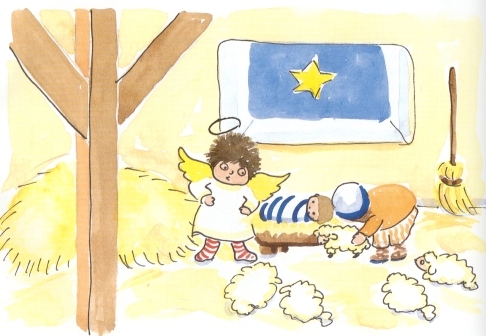
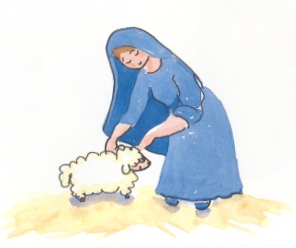
A young shepherd took a woolly lamb and laid it at the foot of the manger.

"What good is a lamb? A sheepskin blanket would have been a better idea," said the angel. "Can you imagine how prickly it feels to sleep on a bed of hay?"

But Mary smiled at the shepherd boy and bent to pat the lamb.

Excerpted from The Fussy Angel by Mary Arnold
Copyright 1995, Bethlehem Books, Used with permission.

Sample Pages from [em]The Last Crusader: Isabella of Spain[/em] by William Thomas Walsh

ISABELLA OF SPAIN

I

ISABEL OPENS HER EYES UPON A MUDDLED WORLD, AND MEETS A KING AND THE KING'S MASTER

ISABEL was born to the purple in no ordinary sense. She was more than the daughter of King Juan II of Castile and his second wife, Dona Isabel, of Portugal. Under the pink and white of her skin pulsed the blood of crusaders and conquerors, the blood of Alfred the Great, of William the Conqueror, of the iron Plantagenet Henry II and the fiery Eleanor of Aquitaine, of Edward I and Edward III of England, of Philip the Bold of France, of Alfonso the Wise of Castile. She was descended on both sides from Louis IX of France and his cousin Fernando III of Castile, both kings, both crusaders and both canonized saints. She derived Lancastrian blood through both parents from John of Gaunt, brother of the Black Prince. Yet her arrival in a chaotic world on the twenty-second of April, 1451, caused hardly a stir even in the little town of Madrigal. Her father, who was at Segovia, announced the event by proclamation: "I, the King. ..make known to you that by the grace of Our Lord this Thursday just past, the Queen, Dona Isabel, my dear and well-beloved wife, was delivered of a daughter; the which I tell you that you may give thanks to God." The infanta was baptized a few days later in the Church of Saint Nicholas, with no especial pomp or display. When the voices of her sponsors rumbled among the arches and arabesques of the old church, renouncing Satan and all his works on her behalf, there was no prophet on hand to cry out that one of the most remarkable women in all history had been born.

During the long and painful confinement of Isabel's mother , there were certain symptoms of poisoning which, although they yielded to antidotes, left her a victim of a chronic nervous depression. In an epoch when the illnesses of the great were often ascribed to the malice of their foes, it was inevitable that people should whisper the name of Don Alvaro de Luna, Constable of Castile and Grand Master of the Order of Santiago, especially as that gifted and charming gentleman had long been suspected of having murdered the King's first wife, Dona Maria of Aragon, and her sister, the Dowager Queen Leonor of Portugal.

Lean, dark and sinister, exquisite in silk and jewels, handsome even in his late middle age, this nephew of the anti-Pope Benedict had been absolute master, for a long generation, of King Juan and of all Castile. He looted the Crown to make himself fabulously rich, he corrupted the Church by naming unworthy friends for benefices, he alienated the nobles by his insolence and arrogance, he infuriated the populace by giving high offices and privileges to Jews and Moors, he sowed discord in Aragon, Navarre, France and Italy for his own ends, and he led a life so dissolute that many blamed him for all the moral decay that made the court notorious. It was in his time, said the chronicler Palencia, that Castile saw the beginning of certain infames tratos obscenos, "infamous obscene customs which have since increased so shamefully." Intimate friend as well as prime minister, he dominated the King completely. He told him what to wear, what to eat, and even when to enter the bedroom of Queen Maria. Various interpretations were attached to the royal complacency. Many suspected the Constable of sorcery. Some said that he was protecting the weak-willed King from his own immoderation; others questioned the legitimacy of Don Enrique, the heir to the throne. But the gossip troubled the King not at all, so long as he was spared the boredom of administration, and left free to indulge his passion for poetry and music, for with all his weaknesses he was a loyal patron of the fine arts.

When Queen Leonor was driven out of Portugal by her brother-in-law, the regent, Don Pedro, she visited her sister, the Queen of Castile; and De Luna, who was friendly to Don Pedro, resented her presence as a threat to his own supremacy. Queen Maria died, after an illness of only three days. There were strange spots on her body, says the chronicler, "like those caused by herbs." Her sister died of the same mysterious ailment. The enemies of Don Alvaro had their opinion.

The King, who was disappointed in his son Enrique, thought of marrying again. His choice fell upon Fredagonde, daughter of Charles VII of France. But Don Alvaro had other plans for him. He had already, in fact, arranged for his master's marriage to the young Princess Isabel, first cousin of King Alfonso V of Portugal and niece of the Regent Don Pedro. The Constable feared the effect of a French alliance on his own position. On the other hand, his friend Don Pedro would know how to influence his young and inexperienced niece in the right direction, and Don Alvaro flattered himself that she would become a pliant instrument in his hands for the domination of the King. Women had always found him irresistible.

In the year 1447, consequently, there came to Burgos a slender princess from the west, whose face was rather melancholy in repose, though it became singularly beautiful, like the glass of some Gothic window, when the light of any emotion shone through it. She was the daughter of the Infante Don Juan, a younger son of Juan the Great of Portugal; her grandmother was Philippa, one of the daughters of John of Gaunt. Her welcoming was magnificent even for a country with a weakness for royal brides. There were dances, banquets, speeches, bull-fights, tourneys, glittering processions. Don Alvaro had arranged everything.

But Isabel had grown up in the court of a strong monarch, and had very definite notions of what a King should be. Her husband the slave of a haughty subject? Intolerable! That any one should attempt to regulate her domestic routine was not even to be thought of. And when Don Alvaro bowed over her hand with his most disarming smile, she read his heart; and, feeling that this man with the soft voice and the touch that made one think of a dark snake, would destroy her, body and soul, unless she destroyed him, she decided without hesitation that he must be destroyed.

To the further annoyance of the Constable, King Juan fell in love with his young wife. Assured by a fortune teller that he would live to be ninety, and finding himself still handsome and charming in his forties, he gave himself up to love and to gluttony, without consulting Don Alvaro as to his comings and goings. The Queen began to feel for him the affection that weak and likable men often inspire in strong-minded women. Pious, energetic, and incapable of compromise where any principle was involved, she threw her influence on the side of the nobles who were constantly plotting for the downfall of the favorite even after he crushed them at the first battle of Olmedo. The suspicion that de Luna had attempted to poison her at the time of the Infanta Isabel's birth urged her on to hasten his fall. Three years after the birth of the Princess Isabel, she brought forth her son, Alfonso; and while he was still in the womb, she accomplished her desire.

The murder of Don Alfonso Perez de Vivero gave her the opportunity she sought. He was the King's messenger, but Don Alvaro, angered because he had forsaken his party for the Queen's, had him thrown out of a window on Good Friday afternoon, in 1453. This conduct agreed so well with the popular impression that the Constable was a Catholic in name only, and a dabbler in black magic, that the indignation against him was extreme. The Queen made use of it to complete her ascendancy over the King. She induced him to have Don Alvaro seized and taken to Valladolid, where a council of his enemies was waiting to pass judgment upon him. At the crucial moment, some of the Conversos whom he had raised to power joined the party of the Queen. Their ingratitude was decisive.

De Luna was as unruffled and confident in misfortune as he had been in power. He knew that, if he could talk with the King for five minutes, his personal charm would gain a pardon. It had on other occasions. N o one knew better than he how difficult it was for Don Juan to punish anyone ; in fact, de Luna had once advised him never to speak with any man whom he had condemned. The Queen reminded her husband of that excellent counsel when he thought of receiving the Constable in audience. Seconded by those who feared the vengeance of Don Alvaro if he returned to power, she adjured him, in the name of Castile, of their love, of their children, of the God so long defied by de Luna, to prove himself a true King by administering strict justice. Twice during the trial, Juan is said to have signed- an order for the release of his friend, and to have been shamed out of sending it by the Queen, who remained at his side night and day. When he ratified the sentence of the Court, his tears fell upon the paper.

Meanwhile in Valladolid, that drab city, preparations for the execution had been completed with almost indecent haste, and at 8 o'clock on the morning of June 2, a crowd was gathering in the Plaza Major before a huge scaffold covered with black velvet, surmounted by a crucifix and a block. Against this sable background, thumbing the edge of the great sword of the Kings of Castile, stood the tall figure of an executioner, masked, silent, wrapped in robes of scarlet. The Plaza was almost filled with peasants, cattle herders, gayly dressed hidalgos who had ridden from far places to see their master's undoing. A trumpet sounded, and down the principal street came a little procession to the sound of muffled kettle-drums: first, a parti-colored herald with gaudy cap and tabard, proclaiming in a loud voice the high crimes of Don Alvaro de Luna; next, two ranks of men-at-arms in leather jerkins and cuirasses, and finally, mounted on a mule, the imperturbable Grand Master, wearing high-heeled shoes with diamond buckles, and muffled to the chin in a long Castilian cloak, while his confessor rode beside him.

The condemned dismounted, gazed serenely about at the brilliant assembly of his foes and the idly curious, smiled as if to say that one could expect no more from human nature, and with a firm step went up to meet the man in scarlet. Never had he looked more noble and gracious than when he raised his fine head and gazed thoughtfully out of his dark eyes over the heads of the people. A murmur of admiration and pity rIppled through the crowd; whereat Don Alvaro placed his hand over his heart and bowed to them with grave gallantry. After another word with his confessor, he loosened the tasseled cord at his neck and handed his cloak to his page Morales, revealing on his breast the sword and cockleshell of Santiago, emblems of the great Crusade that he had sacrificed to avarice and ambition. He handed the page his hat; a ring, as a keep- sake. If he glanced down the narrow street to see whether the King's messenger was coming, if he began to doubt the promises of his astrologers, he betrayed no uneasiness when he turned again to the spectators and in a resonant voice wished happiness and prosperity to the King and people of Castile. The sunlight sparkled on his coal black hair, on the jewels at his feet and his waist, on the newly ground steel of the sword of justice. Don Alvaro casually examined the block and the sword, took from his bosom a black ribbon, handed it to the executioner for the binding of his hands. This done, he knelt before the crucifix and prayed with fervor. A silence like the dying of the wind in a field of wheat fell over the murmuring crowd. The Grand Master was placing his head on the block. The man in red made a pantherlike movement. There was a flash of steel. Cries and shrieks burst from the Plaza. The head rolled in the dust. Castile! Castile for the King Don Juan and his wife Lady Isabel!

It was the young Queen's hour of victory, but the chalice of her triumph was bitter. For the King suffered the remorse of the imaginative, and all the rest of his miserable days passed in self-reproaches for the doom of his friend. Even the birth of his son Alfonso, November 15, 1454, left him unconsoled. He died the following July, after a reign of forty-eight indolent years, moaning, "Would to God I had been born the son of a mechanic instead of the son of a King !" He had encouraged art and literature, he had given power and privileges to the Jews, he was father to a princess in whom his intellect and her mother's will compounded to form greatness. History has remembered little more of him. His magnificent tomb is in the Cartuja de Miraflores, two miles from Burgos.

After his funeral and the coronation of the new King Enrique IV, the Queen withdrew from the court with her two children, and made her residence in the small castle of Arevalo, in Old Castile. Alfonso was an infant in the cradle. The Infanta Isabel was a self-possessed little blonde girl of three years, with wide shoulders and sturdy legs, who regarded the world frankly and analytically through large blue eyes in which there were tiny streaks and specks of gold and green.

The melancholy that had fallen upon the Queen when Isabel was born became habitual. After the King's death she was seldom free from illness, never from anxiety. Her allowance from her stepson Enrique, who had never liked her much, came so irregularly that the little family was sometimes reduced to the bare necessities, almost to actual want. But as all other resources failed her, the pious Queen turned more than ever to the solace of religion, and spent what remained of her superb will in the service of her children. Isabel remembered her lying in bed, ill; in white mourning garments, weeping for the King ; in the chapel, kneeling in reverence before the uplifted Host. The child remembered something vague but terrifying about the execution of Alvaro de Luna, for it was much talked about, and sung about in popular ballads. She recalled being told at the age of six that King Enrique was arranging for her marriage to Prince Fernando, the five year old second son of the King of Aragon. Fernando! The name was like a ball chiming in a far country of romance. It was odd to be the betrothed of a Prince that one had never seen.

At Arevalo Isabel formed her first friendship, one that lasted until the day of her death. Beatriz de Bobadilla was a child of her own age, daughterof the governor of hte castle. Beatriz was dark and emotional, while Isabel was fair, reserved and strangely mature. They became inseparable. They played games together in the inclosed garden of the Alcazar, they learned to read by the bedside of the Queen, they approached the altar in the chapel together to receive their first Holy Communion. Sometimes they rode with the governor and his troops through the little walled town into the flat checkered country, where fields of wheat and saffron extended one after another as far as one could see - the wheat almost the color of Isabel's hair, and the saffron very fragrant on the wind. Cows and horses grazed in the pastures along the meandering Araja. Beyond the green places lay a flat desert, stark and treeless and full of unknown things to be feared. The lights and shadows alternated on this level plateau in broad undulating bars, like the waves of a great dark sea.

Sometimes they rode as far as Medina del Campo, where the greatest fair in Spain was held three times a year, and merchants came from all over southern Europe to buy choice Castilian wools and grains, and blooded steers and horses and mules from Andalusia. There were cavaliers from Aragon, sailors from Catalonia on the east coast, mountaineers from Guipuzcoa on the north, turbaned Moors from Granada in the south, blue-eyed Castilian farmers, bearded Jews in gaberdines, peasants from Provence and Languedoc, sometimes even an Englishman or a German. The people interested her, but not so much as the horses. Before Isabel was ten she scorned the mule that etiquette ordained for women and children, and kept her seat on a spirited horse. Days in the saddle made her hard, straight, resourceful, fearless, indifferent to fatigue, contemptuous of pain; a vigorous girl with delicate pink complexion, a firm prudent mouth, a lower jaw a trifle heavy, indicating unusual energy and will. She became a skilled huntress, commencing with hares and deer, but later following the black wild boar, and on one occasion slaying a good-sized bear with her javelin. Her brother, Alfonso learned also to handle a sword and to tilt with lances.

Isabel grew up without a knowledge of Latin, but her education in other respects was sound and well balanced. She learned to speak Castilian musically and with elegance, and to write it with a touch of distinction. She studied grammar and rhetoric, painting, poetry, history and philosophy. She embroidered intricate Moorish designs on velour and cloth of gold, and illuminated prayers in Gothic characters on leaves of parchment. A missal that she painted, and some banners and ornaments for the altar in her chapel, are in the Cathedral at Granada. She had inherited a love for music and poetry. She read her father's favorite poet, Juan de Mena, and probably a Spanish translation of Dante. Her tutors, having studied at Salamanca University, must have given her at second hand the philosophy of Aristotle on which Saint Thomas Aquinas had built the great synthesis that was the foundation of medieval teaching.

Some notion of how science was taught at the period may be had from a philosophical and allegorical novel called the Vision deleytable, written by the Bachelor de la Torre about 1461 for the instruction of Prince Charles of Viana, Isabel's second fiance. "I perceive that motion is the cause of peat," says the young hero; and goes on to discuss why there are perpendicular lines on the sun, what makes the wind blow, why climates differ, why materials are different, what causes the sensations of smell, taste, hearing, why some plants are large and others small, the properties of medicines-and all this sugar-coated in the form of a novel! The tragedies of Seneca were known in Spain. One of the first books published after the introduction of printing in Isabel's reign was a translation of Plutarch's Lives by Alonso de Palencia; another by the same author was Josephus's History. Spanish versions of the Odyssey and the Aeneid were popular in the court of Isabel's brother. Books of medicine and surgery and anatomical charts were fairly common in a country where the Jews had long excelled in the healing art. From singing the Cancioneros that had been so dear to her father, Isabel evoked from the past the heroic story of her crusading ancestors; and from the chronicles of her own time, there unrolled before her keen intelligence and strong imagination a picture of the fascinating and terrifying world into which she had been born.

She was a King's daughter and the half-sister of a King, and there were certain inevitable questions that she must have asked her mother. What manner of man was Don Enrique IV, and what was he doing to bring back the glories of Saint Fernando and Alfonso the Wise, and heal the scars that the gemmed boots of Don Alvaro had left upon the face of a Castile weary of wars and feuds ?

His Majesty occasionally rode to Arevalo to visit his relatives. Isabel remembered his coming there one day with two cavaliers, the Marques of Villena and his brother Don Pedro Giron. These gentlemen, she learned afterwards from her mother, were the King's closest companions, his criados, who advised him in everything and who therefore were the two most powerful persons in the realm. Perhaps that was why they cut a more magnificent figure than King Enrique himself. They wore fine silks, bordered with cloth of gold, large and brilliant jewels, heavy gold chains cunningly wrought by smiths in Cordoba. The King looked shabby beside them. Loose-jointed, tall and awkward, he wore his long woolen cloak in a slovenly way, and instead of .the boots that Castilian cavaliers wore, had his small delicate feet shod in buskins, like those of the Moors, with mud on them, so that they looked all the more peculiar on the ends of his long legs. But his face puzzled the little princess even more than his queer clothes and his familiar way of speaking to the servants. His skin was very white and rather puffy. His eyes were blue, somewhat too large! and" somehow different from the eyes of other people. His nose was wide, flat and decidedly crooked, the result, it was said, of a fall he had as a boy. At the top of that prominent organ were two vertical furrows into which the bushy royal eyebrows curled up in a most peculiar manner. His beard was shaggy , with auburn streaks in it, and stuck out so oddly and abruptly that it made his face in profile look concave. But it was the eyes that one kept looking at and wondering about. There was a strange look of grievance and bewilderment in them, an inquietude that vaguely disturbed one. What did they remind her of ? His chaplain, who wrote a eulogy of him after his death, recorded that Enrique's "aspect was fierce, like that of a lion that by its very look strikes terror to all beholders." But it did not remind the chronicler Palencia of a lion at all. It reminded him of one of those monkeys that Isabel had seen in a wooden cage at the fair at Medina del Campo. His eyes glittered and roved about and looked ashamed, just like a monkey's.

His Majesty talked of one thing and another, sometimes turning for confirmation of what he said to the Marques of Villena, who nodded or put in a suave word in his slow drawl. This gentleman, had he had the good or evil fortune to be born later, would have been called a self-made man; for in the time of King Juan he was one Juan Pacheco, a page introduced at court by Don Alvaro de Luna. Though a professing christian, he was one of many with Jewish blood in their veins who owed their prosperity to the great Constable; on both sides he was descended from the Jew Ruy Capon. But, with other Conversos of the court, he had requited his benefactor by helping to overthrow him. Prince Enrique, whose elevation was thus hastened, rewarded Pacheco by making him Marques of Villena and his intimate companion and adviser .

Of the three men, the Marques was the most likable, because there was a twinkle in his shrewd eyes, and his beard and mustache were positively fascinating, so ingeniously had they been curled. Besides, he smelled delightfully of ambergris. He had a long aquiline nose, quite hooked in the middle and pointed at the tip; and somewhat too near the base of it, a narrow mouth with full lips, giving a curiously cherubic expression to the whole face. On either side of the mouth a carefully waxed and twisted mustache drooped somewhat dejectedly for a short distance, and then of a sudden turned out and up into two jaunty and devil-may-care points. The Marques could be charming when he wanted to be, and on this particular occasion he made himself most agreeable.

His brother, Don Pedro Giron, was also of that numerous class of Castilians known as Conversos, or New Christians. He must have made at least some pretence of being a Catholic, else he could hardly have attained to the Grand Mastership of the illustrious military Order of Calatrava, founded by two Cistercian monks and consecrated to the rule of St. Benedict. He was a sleek, well-fed man, probably a sensual and passionate man. He hardly glanced at the Queen, but his eyes returned from time to time to gloat upon the fresh blonde beauty of the young princess, and his look was one of those under which a woman has almost the sensation of being forcibly disrobed.

After the King and the two cavaliers had gone, Isabel found her mother weeping in her apartment. She may have divined that the royal visit in some way concerned her, but she was too young to be told of the indecent proposal that Don Pedro had made on another occasion to the Queen, and at the instigation - so he said - of King Enrique himself.

Excerpted from The Last Crusader: Isabella of Spain by William Thomas Walsh
1930, TAN Books and Publishers, Used with permission.

Sample Pages from [em]The Little Flower: The Story of Saint Therese of the Child Jesus[/em] by Mary Fabyan Windeatt

Chapter One

The Baby of the Martin Family

Papa was a watchmaker and had a rather long name - Louis Joseph Aloysius Stanislaus Martin. Mama's was much shortert - Zelie Marie Guerin. They were married on July 13, 1858, in the churcyh of Notre Dame in Alencon, France. Papa was about thirty-five years old at the time, Mama was twenty-six. A few people were afraid that the marriage was a mistake. You see, they were remembering those days long ago when Papa thought he had a vocation to be a monk. They also remembered that Mama once tried to enter the religious life, too - as a Sister of Saint Vincent de Paul.

"Louis Martin and Zelie Guerin are far too holy to live in the world," these people told one another. "Each would be better off in some monastery."

But this was not so. God did not want Papa or Mama to live in the cloister. He wanted them to live in the world. He wanted them to have many children and to teach these little ones the beauties of the Catholic faith. So it was that they married each other, that thirteenth day of July in the year 1858, and settled down to a quiet life in Alencon.

The first child God sent my parents was a girl. She was called Marie Louise in Baptism, although from the start Papa justa called her Marie - which is the French form for Mary.

"We'l giev each of our little ones the first name of Marie," he said. "Even the boys. In this way they'll all be consecrated to the Blessed Virgin."

It was a fine thought, and one with which Mama readily agreed. She had a very high opinion of Papa, and not a day passed that she did not thank God for giving her such a fine husband. How king he was! And how hard he worked at his comfortable home! Truly, there was no better man in Alencon, in all France than Louis Joseph Aloysius Stanislaus Martin!

As time passed, my parents prayed very hard that God would send them a little boy. They were anxious to have a son to give to the priesthood. But the next three babies were all girls: Marie Pauline, Marie Leonie, Marie Helen. It did seem as though the many prayers for a son, "a little missionary," would never be answered. Then one find day Marie Joseph Louis came to gladden the hearts of all.

"Here's our priest!" said Papa delightedly.

Alas! The new baby lived only five months. Then God called him to Heaven. The same thing happened with Marie Joseph John Baptist - the sixth child to come into our home. This little brother lived to be eight months old. Then he died, too.

Poor Papa! Poor Mama! They were deeply afflicted at the loss of their two little sons. But they loved God in a really honest way, which means that they loved His Will and trusted it more than their own. Therefore, they did not grieve long. Besides, faith told them that they had given new saints to love God in Heaven.

"The boys will pray for us," Papa said. "Just think! They went to god without one sin on their souls!"

Presently another girl was born in our house - Marie Celine. The next year came one more - Marie Melanie Therese. This little one lived only a short time. Then death came again as God called to Himself the fourth child in our family: five-year-old Marie Helen.

The neighbors were shocked at all the sorrow which came to our house. "Four children dead out of eight!" they said, sadly shaking their hads. "Really, it would be better if these little ones had never been born. Then their parents would have been spared a good deal of pain."

"No, no!" Mama would protest. "My children are not lost to me. Life is short. We shall meet again in Heaven."

"And we still have Marie, Pauline, Leonie and Celine to cheer us up," Papa would put in, comfortingly. "My business is prospering, too. Why should we complain?"

Everyone marveled at the wonderful way in which Papa and Mama accepted these fresh trials. Death ahd called four times in twelve years, yet the Martin house was still a cheerful place. So was the shop where Papa worked at his trade of watchmaker and jeweler. It was a pleasure to visit either one.

Time passed, and presently it was the year 1873. Marie and Pauline, students at the Visitation convent in Le Mans, were home in Alencon for their Christmas vacation. Late on the night of January 2, Papa went upstairs to the little room where they were sleeping.

"Wake up, children!" he cried excitedly. "I have some news for you!"

The girls sat up with a start, blinking at the light from Papa's lamp. What had happened? Why was their faither standing in the doorway with such a big smile on his face?

"What is it, Papa?" asked Marie anxiously. "Mama's not sick again?"

A dozen questions were on Pauline's tongue, but Papa gave her no change to ask them.

No, Marie. Mama's all right. And you have a new sister now - a beautiful little girl!"

Yes, it was January 2, 1873, and God had sent me to earth at last - to the wonderful Christian home of Louis Martin, watchmaker of Alencon!

Of course Marie and Pauline found it hard to go to sleep after Papa's visit. They asked each other many questions about me. For instance, was I a healthy baby! Would I stay with them or go to Heaven like the other little sisters and brothers? What would Papa and Mama call me? When would I be baptized? Who would be my godmother?

"Marie, I think you'll be chosen," said Pauline suddenly. "After all, you're the oldest - thirteen next month. I'm only eleven."

Marie smiled. To be godmother of the new little sister! That would be wonderful!

"Oh, I hope so," she said softly. "I've never been a godmother in my whoel life."

So it came to pass that on January 4, when I was two days old, a little procession set out from our house and made its way through the snowy streets to the church of Notre Dame. Our maid, Louise, carried me in her arms, well warpped in blankets. Then came Papa, with Marie and Pauline each hanging on an arm. There were also soem neighbors and friends.

"Papa, tell us again what the baby is going to be called," said Marie. "I"m so excited about being her godmother that I'm not just sure."

Papa laughed heartily. "Her name is a nice one, child. Marie Frances Therese." Then the happy light died out of his eyes as he gave a quick glance at the wintery sky.

"Dear God, please leave this cihld with us!" he whispered. "In the Name of Thy Son, Jesus Christ!"

There was good reaosn for Papa to be anxious about me. In the days following my Baptism, I fell ill and it seemed likely that God soon would take me to Himself in Heaven.

"The only way that this child can be saved is to give her to a good nurse," said the doctor. "One who lives in the country. Perhaps with proper food and plenty of fresh air and sunnshine, the baby will get strength enough to live."

Poor Mama! She did not want to be parted from me, yet she agreed to do whatever the doctor thought best. There was a farm woman she knew, Rose Taille, who might take care of me for a few months. She had been very successful in nursing other sick children. Perhaps she could help me, too.

Rose Taille wasn't sure about this. The day Mama brought her into Alencon to have a look at me, the good-natured woman gave a great sigh. She had never seen such a poor little scrap of humanity. Why, I was nothing but skin and bones! And so pale!

"I"ll do my best," she told Mama. "But I can promise you nothing, Madame. Ah, what a sickly little mite we have here! Only prayers will save her, I'm thinking."

Mama nodded. There would be plenty of prayers - to Saint Joseph, to the Blessed Virgin, to all the saints. Oh how she would pray for me! And Papa, too.

So Rose tok me out into the country, pausing frequently on the journey to see if I was still alive. She was a little worried about this new responsibility. She had four children of her own to care for, and it was necessary to help her husband with the farm work, too. Perhaps she shouldn't have taken me with her. If I died, people might blame her.

But I did not die. God heard the fervent prayers which Papa and Mama offered for my recovery, and at Rose's house I became a totally different child. This was not because the good woman had any luxuries to give me. On the contrary, she had very little time to spend on my care. Because there was no proper carriage, she would put me ina wheelbarrow filled with hay and take me out to where she and her husband were working. Sometimes I was left alone under a tree. At others, Rose put the wheelbarrow in the sun.

"The little one is too pale," she said. "Maybe the sunshine will help her to grow strong."

I did grow strong and brown. In a few months there was no longer any danger that I would die. Rose was very proud, and one May day she took me hom to show Mama how I had grown. Why, I weighed fourteen pounds!

"Therese is going to be all right, Madame," she said thankfully. "And I think I can leave her with you, now that she's nearly five months old."

Mama was so happy. "Rose, how can I thank you?" she cried. "You saved my little girls' life!"

Rose smiled shyly as she put me into Mama's arms. "I have to go to the market now," she said. "It's the day for selling butter, and I'm late."

Of course I could not understand what Rose was saying, but it did not take long for me to realize that she had left me in a stranger's arms. At once I started to cry. Nothing could make me stop. As time passed Mama became frightened. She tried to comfort me, to sing little songs, to rock me to sleep. I wasn't interested. I wanted Rose, no one else. Finally Mama called the maid.

"Louise, what am I going to do? Therese will make herself sick with all this crying!'

Louise peered down at me. I was screaming at the top of my lungs, and my face was a deep and angry red.

"Do you really want my opinion, Madame?"

"In Heaven's name, yes! None of my other children ever acted like this."

Louise smiled. "It's simple, Madame. The child wants Rose. She won't stop crying unless we take her to her."

"But Rose is selling butter at the market!"

"She could still look after the baby, Madame. And she'd be pleased if we told her how the little one misses her."

Poor Mama! She didn't want to let go of me but there was nothing else to do. "All right," she said sadly. "Take Therese down to the market, Louise. But if she still keeps on crying, what shall we do then?"

There was no need for Mama to worry about this. As soon as Louise and I arrived at the market, where women from the farms outside Alencon were selling their butter, I began to smile. Then I laughed and laughed, for my eyes had caught sight of Rose. I stretched out my arms happily. This was what I had wanted all the time - my mother!

I stayed at the market until noon, happy and contented as Rose and her friends sold their butter. A few people asked questions about me as I lay quietly in my good friend's arms.

"Rose, I didn't know you had such a little girl as this one," they remarked. "And she has fair hair. I thought your children were dark."

Rose laughed. "Oh, the child isn't mind," she said.

"Then whose is she?"

"She belongs to the Martin family, Lord bless her! And good as gold she is, too - at least when I'm looking after her!"

Excerpted from The Little Flower: The Story of Saint Therese of the Child Jesus by Mary Fabyan Windeatt
Copyright 1944, TAN Books and Publishers, Used with permission.