No name

Little Angel Readers

Book cover: 'Little Angel Readers'
Author(s): 
Linda Bromeier
Subject(s): 
Grade / Age level: 
Review: 

The Little Angels Series are four soft cover readers that teach all phonics sounds using word drill pages and phonetic stories. It teaches letter-sound relationships systematically, beginning with the easiest letter sounds. The word drill pages provide practice in decoding words containing the letter sounds. The stories with phonetically-controlled vocabulary follow each word drill page. They provide practice in decoding words in context and build comprehension skills. The stories are about Catholic family life, Bible stories, and Saint stories as well as fables and folk tales. The illustrations are well done and many are in color. Review pages are provided at regular intervals.

The workbooks are consumable and accompany the readers. They reinforce the lessons from the readers with exercises in phonics, vocabulary, reading comprehension and handwriting.

The Teacher's manual provides detailed lesson plans and suggestions for related activities. The manual provides daily lesson plans for teaching the entire series. The lessons cover reading readiness, phonics, listening skills, vocabulary, handwriting, comprehension and spelling. There are also multi-sensory activities included to accommodate children who have different learning styles. The pace is very flexible so you progress at *your* child's speed. The manual also contains progress test after each review to assess how well your child is doing.

Sequence of Phonics Reader A - Consonants, short vowels Reader B - final blends, -ed, -ing, long vowels, two-syllable words Reader C - Beginning consonant blends, Y as a vowel, Consonant digraphs, R- controlled vowels Reader D - vowel digraphs and diphthongs, soft c and g, Irregular sounds and spellings

The author holds a MEd in Reading from the University of Missouri-St Louis and is certified in Learning Disabliites. She has six years classroom experience and nine years experience in home education.

I am using the Little Angels in place of the MCP phonics that Seton sends with their First Grade Curriculum. If you need something for Kindergarten, with beginning sounds and letter recognition, I highly recommend Seton's Kindergarten Phonics for Young Catholics. I have had great success with the Little Angels series with my daughter who is now finishing Reader D. She is 8 years old. My son who is 7, could not wait to start the readers and is also on Reader D. The Little Angels Phonics Series is really a wonderful tool for teaching your children to read.

Publisher: 
Stone Tablet Press
Review Date: 
2-10-01
Reviewed by: 
TitleSort: 
Little Angel Readers

Little Folk's Letter Practice

Book cover: 'Little Folk's Letter Practice'
Author(s): 
Nancy Nicholson
Subject(s): 
Grade / Age level: 
Copyright: 
1997
Review: 

We reviewed Little Folks' Letter Practice. We found this to be very simple. For our child this was too easy for K level. It is basically for the Pre-K level. It has pages that are of coloring book quality. We photo copied the pages to make them easier to write on with a pencil. The letters of the alphabet are one to a page with a trace and write page following each letter. The pictures with each letter try to complement our faith. The introduction offers creative advice for the use of the book. The last 5 pages of the book encourage the child to sound out words. There are four or five possible words in a column. A blank has been left in front of each word, such as 'an'. Pictures to the possible word are in the right hand column to assist the child in the discovery of the word. The child will need to sound out the word in the column look at the pictures such as 'man' and write the consonant. There are no difficult words to sound out. All words are only three letters such as 'man', 'cat', 'mop', etc. This is a nice book for becoming familiar with the alphabet.

Publisher: 
Catholic Heritage Curricula
Binding: 
Stapled Softcover
Perspective: 
Catholic
Number of pages: 
62 pages
Review Date: 
1999
Reviewed by: 
TitleSort: 
Little Folk's Letter Practice

Little Folks' Number Practice

Book cover: 'Little Folks' Number Practice'
Author(s): 
Nancy Nicholson
Subject(s): 
Grade / Age level: 
Copyright: 
2002
Review: 

"A Pre-K to Kindergarten Math Readiness Workbook for Catholic Children."

This simple workbook provides practice for preschool and kindergarten aged children in writing numbers, counting objects and considering religious ideas associated with each number (one God, two natures: human and divine, three Divine Persons, four marks of the Church: One - Holy - Catholic - Apostolic, five Sacred Wounds, etc.). There are three pages each for the numbers one through ten which contain writing lines for handwriting practice of the numbers, related black and white illustrations to color, pictures to circle and count, etc. The remaining pages provide practice in counting sets of things ("circle the correct number" for several pages and "write the correct number" for others). The final eight pages offer simple exercises involving numerical order, more and less, some very basic addition and simple shapes. The pages would have to be read aloud to young children.

Publisher: 
Catholic Heritage Curricula
Binding: 
Stapled Softcover
Perspective: 
Catholic
Number of pages: 
46 pages
Additional notes: 

Copyrights 1997/2002

Review Date: 
7-7-05
Reviewed by: 
TitleSort: 
Little Folks' Number Practice

Little Saints

A Catholic Preschool Program with Classical Disciplines
Book cover: 'Little Saints: A Catholic Preschool Program with Classical Disciplines'
Author(s): 
Cynthia Blum
Subject(s): 
Grade / Age level: 
Review: 

I'm just thrilled with it the Little Saints program on my first overview. The subtitle of the book is "A Catholic Preschool Program with Classical Disciplines", and it is just what I wanted last year! I'm going to try it with my soon-to-be-3 year old and my Kindergartner this year.

Last year, I purchased one of the Five in a Row (FIAR) volumes, but FIAR just didn't mesh well with our gang. My 4 year old (who is the size of an 8 year old and looks like a meat packer, but is really an "artsy" teddy bear at present) was bored by re-reading the same book for a week, and he wasn't too thrilled with the question/answer/research type of work. He wanted to MAKE things and read MORE books...sounds like his mama!

The Little Saints program is *not* a phonics or math or "academic" preschool program, although phonics and handwriting and basic math information is included. It is heavily based in literature, religion, and the arts. I'm overwhelmed as it is *just* what I would have wanted to do had I the proper background....and a dozen years of free time.

The program is laid out by month, with "themes" for each week during the months of August through May. The 40 themes are those typical of preschool: seasons, family life, animals, senses, people around the world, and so on. Each theme is organized into a 3-day school week, with many ideas of activities for that day.

Every "day" has notes for the teacher as to the basic goal of the day, a short quote from the Bible (which I will be using for copywork for my Kindergartner), storytime, nursery rhymes, poetry, story-telling and finger plays (memory work), songs and circle games, at least one learning game, and an art project. The first pages of each week/theme clearly lays out for the busy parent: exactly what materials are needed for each game and each project, a listing of the skills being worked on that week, a listing of correlated classical music for music appreciation, and a long listing of picture books on the theme of the week. Most of the titles of the picture books are familiar to me, so they are either "classics" or easily found at the library.

The appendices include the text of the rhymes and finger plays and songs. The author notes that if you repeat the program for a second year that you will notice a considerable difference between a 3 year old child and a 4 year old child.

In short, I'm just thrilled with this program.

Review Date: 
8-21-2000
Reviewed by: 
TitleSort: 
Little Saints

Little Stories for Little Folks

Catholic Phonics Readers
Book cover: 'Little Stories for Little Folks: Catholic Phonics Readers'
Author(s): 
Nancy Nicholson
Subject(s): 
Grade / Age level: 
Copyright: 
2004
Review: 

Little Stories for Little Folks is a Catholic phonics readers set that offers an inexpensive alternative to the Bob Books. The entire Bob Books set (5 sets of booklets retailing for approximately $15 each) costs about $75 retail. In contrast, Little Stories for Little Folks costs about $25 for the whole program. While the Bob Books and other readers might turn out to be helpful for some families (and are available at some libraries), many families have been very grateful for this charming Catholic set at such a good price.

The Parent's Guide offers steps to prepare your child to read by using the enclosed flashcards (printed on card stock) to gain letter and sound recognition and then proceeding to work on pre-reading blends (with the pre-reading sound blend sheets that are included in the program and printed on card stock). After these steps are accomplished, the child will be ready to proceed to the phonics readers. The parent's guide also offers discussion questions to help your child get more out of each story.

There are four sets of readers, each set being identified by its own color. The booklets and flash cards come as an 8 1/2 x 11 pad. Each booklet starts out as a regular-sized piece of paper which you fold into four to form a child-sized booklet.

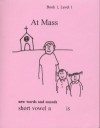
Level 1 contains 15 booklets. The story titles are: "At Mass", "Stop! Hot Pot!", "Sad Nip", "Mud on the Rug", "The Hot Pup", "Mom Gets Help", "The Rat", "Little Ann", "Bat the Ball", "Funny Ann", "The Campers", "God With Us", and "Messy Room".
This set starts with simple words such as "pat" and "sat" and progresses slowly to more complex words like "tent", "small" and "under".

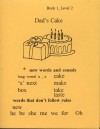
Level 2 contains 10 booklets. The story titles are: "Dad's Cake", "Mrs. May is Sick", "Mike's Bike", "Visit the Sick", "We Hope to See the Pope", "The Little Goat with No Sense", "The Cold Rain", "Feed the Hungry", "The Tease", and "Noon Potluck."
This level starts with words like: "cake" and "taste" and progresses to words like "salad", "baby" and "table".

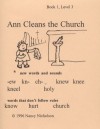
Level 3 contains 10 booklets. The story titles are: "Ann Cleans the Church", "Blessed Sacrament", "St. Paul", "A Toy for a Boy", "At the Beach", "The Found Rosary", "Run the Race", "School, Where?", "The Quake", and "I Didn't Know".
The starts with words like "kneel" and "holy" and progresses to words like "receive" and "neighbor".

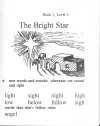
Level 4 contains 10 booklets. The story titles are: "The Bright Star", "The Caught Calf", "Mr. Brown's First Holy Communion", "Kim's Adoption" (in two parts), "In the Match Box", "Badge Fudge", "Squirt", and "Our Lady's Secret".

This level starts with words like: "night" and "follow" and progresses to words like "cheerfully" and "enough".

Publisher: 
Catholic Heritage Curricula
Binding: 
Softcover
Perspective: 
Catholic
Additional notes: 

Set contains:
22 page softcover parent's guide, set of 45 booklets, 47 flashcards

Copyrights 1998/2004

Donated for review by Catholic Heritage Curricula

Review Date: 
11-18-02
Reviewed by: 
TitleSort: 
Little Stories for Little Folks

Little Stories for Little Folks

Catholic Phonics Readers (additional review)
Author(s): 
Nancy Nicholson
Subject(s): 
Grade / Age level: 
Copyright: 
2004
Review: 

Our third child, now a deep voiced high schooler towering me by several inches, learned to read with me when he was five years old using these little folding readers. This new edition has a new cover and some additional materials, but the readers themselves are the very same I used ten years ago! He looked at these the other day and could remember many of the stories.

The bulk of this program consists of four levels of readers that we tear out and fold in four. I made color coded envelopes out of construction paper ten years ago, the same envelope I am using with our youngest this year. I tucked the envelopes in a pocket folder, and as we folded and read each little book, it was neatly stored.

The little books follow a simple sequence of phonetic sounds, beginning with the "short a" in the first title At Mass. What we like about these is the fact that we begin from day one reading a little story. None of my children enjoyed very much reading pages of words in other readers. These have a few new words displayed on the little book's cover, but each little book is one independent whole story. These mini-stories are delightfully Catholic, and succeed in being at the same time funny and suspenseful enough!

This latest edition has a nice new glossy cover and several cardstock pages with phonics strips and illustrated phonetic sound cards to cut. Silly Willy Sentences strip are also included, introducing basic syntax concepts. A separate Parent's guide booklet is included, with simple guidelines for teaching to read with this program, and booklet-by-booklet directions for introducing the new sounds and words.

Publisher: 
Catholic Heritage Curricula
Perspective: 
Catholic
Additional notes: 

4 levels, 45 stories to fold into booklets, bound Parents' Guide, Silly Willy Sentences activity, and Catholic flashcards on stiff cardstock

Review Date: 
3-15-2007
Reviewed by: 
TitleSort: 
Little Stories for Little Folks

Little Therese

Book cover: 'Little Therese'
Author(s): 
Adapted from Pere J. Carbonel, S.J.
Subject(s): 
Setting: 
Grade / Age level: 
Copyright: 
1925
Review: 

This biography of St. Therese of Lisieux for children emphasizes the story of her childhood, her simple spirituality as taught to her by her family with an emphasis on the little acts of sacrifice she made and how that helped her to develop control of her will. The story includes many details of Therese's childhood and family life that Catholic homeschool families will relate to. It is told in a way that encourages young children to offer little sacrifices to God in imitation of this saint. I was particularly amused to hear that St. Therese at first did not want to study her lessons and would hide from her mother. I know that this particular behavior is one that has frustrated a number of homeschooling mothers. They may be encouraged to know that Zelie Martin struggled with this too and may wish to ask Blessed Zelie and Saint Therese to gain the cooperation of their children. The book also includes numerous pen and ink illustrations (on almost every page) which highlight the ways in which St. Therese imitated Our Lord even as a small child. A sixteen page segment in the middle of the book provides a timeline and a number of black and white reproductions of photos and paintings depicting her life.

Publisher: 
Catholic Heritage Curricula
Binding: 
Softcover
Perspective: 
Catholic
Number of pages: 
153 pages
Review Date: 
9-24-2000
Reviewed by: 
TitleSort: 
Little Therese

Living the Liturgical Year: Volume 1

Book cover: 'Living the Liturgical Year: Volume 1'
Author(s): 
Paula McEneany
Subject(s): 
Grade / Age level: 
Copyright: 
1999
Review: 

This new book on the liturgical year was published last year by a recent homeschool graduate. The segment on Advent covers 34 pages (the pages are 8 1/2 x 11 inches with very dense text - so this is quite a bit of material). Miss McEneany, has provided a very thorough, updated resource for Advent traditions by bringing together detailed instructions, ideas and explanations from a wide variety of resources (including quotes from the Catechism of the Catholic Church and explanations about traditions from the Byzantine rite). This segment on Customs for Advent includes information about the Advent Wreath, (and the Byzantine Advent wreath), the Christ Candle, Jesse Tree Symbols and corresponding Old Testament readings, Advent Friends (sometimes called Kris Kringles), Gifts and Cribs for Jesus (to prepare with good deeds, prayers and sacrifices during Advent), ideas for daily spiritual devotions during Advent and quite a bit more. Each explained custom (where appropriate) also includes related prayers.

The second chapter provides detailed ideas for Home Education during Advent by means of a unit study on the time before Christ. This unit study ties together a certain amount of History, English/Vocabulary, Geography, Religion, Math, Literature, Health, Religion, Art, Science, Home Economics and Latin/Music in order to delve deeper into the meaning of Advent.

Chapter three covers Advent Recipes which differ from older books because of a more modern emphasis on natural foods. I would also have to explain that the recipes are not necessarily "traditional" Advent recipes, but rather natural food recipes that would be considered appropriate for Advent. This chapter includes an extensive segment on growing sprouts as well as recipes for dishes (along with explanations of why they are appropriate) such as: Avocado Potato Salad; Root, Sprout and Flower Noodle Salad; Carrot Salad Fish Loaf, Beet Soup, Avocado-Cauliflower Cream Soup, Carrot Cake and Sprouted Sunflower Burgers. All recipes in the book are meatless and in fact contain no animal products (making them cholesterol free). A four page section in the middle of the book provides glossy, full-color photos of the recipes, many of which incorporate festive decorations. The book also includes an extensive bibliography, a listing of sources for materials and foods mentioned in the book and an alphabetical index of recipes.

Publisher: 
In Ipso Press
Binding: 
Softcover
Perspective: 
Catholic
Number of pages: 
152 pages
Additional notes: 

This book was donated for review by the author.

Review Date: 
11-9-2000
Reviewed by: 
TitleSort: 
Living the Liturgical Year: Volume 1

Lord of History Card Game

Book cover: 'Lord of History Card Game'
Subject(s): 
Grade / Age level: 
Copyright: 
2001
Review: 

These playing card-sized history supplements portray 24 important figures in Catholic history (the remaining card is a cover card with instructions for games that can be played with the set). There is one card for each of the following people: Alfred the Great, St. Joan of Arc, Prince Henry the Navigator, Christopher Columbus, Mary Queen of Scots, Marco Polo, John Henry Cardinal Newman, Fr. Jacques Marquette, King St. Louis IX, Queen Isabel of Castile, Charlemagne, St. Francis Xavier, Dante Aleghieri, Emperor Constantine the Great, St. Thomas More, G.K. Chesterton, Junipero Serra, St. Benedict, Francisco Franco, Hernando Cortez, Michelangelo, St. Augustine of Hippo, King Philip II of Spain and Mother Teresa. The back of each card offers a brief biographical sketch highlighting key events and accomplishments of each figure. The views expressed regarding these historical figures (particularly some of the more controversial ones) are consistent with the historical writings of Anne and Warren Carroll. The game involves learning the key facts and gaining points for identifying different levels of information (from simply recognizing the figure on the card to identifying the Christian significance of the individual). The cards are very professional in appearance and come in a small clear plastic case with a hinged lid.

It's nice to find a colorful Catholic history supplement of this nature that includes both saints and other figures of importance. I'm sure that many children will enjoy this fun way of learning about key Catholic figures from history. It should also serve to inspire them to learn more about their favorite ones. Even though I've read a great deal about History, simply reading these brief sketches helped me make some interesting connections that I hadn't yet made. My only complaint is that the writing style in some portions of the biographical sketches is rather poor.

Publisher: 
Lord of History
Perspective: 
Catholic
Number of pages: 
25 pages
Additional notes: 

25 glossy cards (2 1/2 x 3 1/2 inches)

This item was donated for review by Lord of History (www.lordofhistory.com)

Review Date: 
11-30-01
Reviewed by: 
TitleSort: 
Lord of History Card Game

Lord of the World

Book cover: 'Lord of the World'
Author(s): 
Monsignor Robert Hugh Benson
Subject(s): 
Grade / Age level: 
Copyright: 
1907
Review: 

Lord of the World, written in the early part of the 20th century, is an intelligent and Catholic fictional extrapolation on the trend towards Modernism described and condemned by Pope Pius X in Pascendi Dominici Gregis and Lamentabili Sane

The setting is a future society where the Catholic Church is no more than an embattled remnant. In the popular and intellectual view, culture has moved past the "need" for faith in the supernatural. Near the beginning of the book, two young priests discuss with their superior how to regain some Catholic foothold in a culture which has been de-sacramentalized; of the two, one goes over to the enemy's side, while the other will be hunted and scorned for his faith. The latter priest, Father Percy, a sort of focal point of the book, has the odd distinction of being physically almost identical to his counterpart, a mysterious international leader who has a more-than-human influence on the people he gathers around him. This anti-Christ figure is personable, not obviously evil, and seems in all ways more powerful than the fugitive priest - but as Christ's representative, Father Percy is ultimately victorious in the task he is called to carry out. Their physical resemblance seems to be a device to underline the contrast.

The contrast is also demonstrated in their respective influences on a married couple and the husband's mother, who are key characters in the book. The mother is drawn back towards the sacraments as she drifts closer to death while the attractive couple move from kind "tolerance" to active antagonism for the church and all it represents.

Modern humanitarian secularism eases into savage barbarism and the light of truth seems to flicker and die, but though the events are dark, the ending demonstrates that the battle has been won on a supernatural level even while lost by worldly standards.

I would probably save this book for an older high-schooler who is mature enough to distinguish between tenets of the faith and imaginative extrapolation. It might be quite interesting to read this book alongside some secular works in the same genre - Aldous Huxley's Brave New World, Orwell's 1984 and Animal Farm, or even some of the works of H.G. Wells. Another book written from a Catholic perspective, a science fiction post-apocalyptic classic from the 1950's, is Walter Miller's A Canticle for Leibowitz. One more book which deals with the effect of modernism on society is C.S. Lewis's That Hideous Strength, the last of his Space Trilogy. I could see these books being read as an introduction to modern worldviews in perhaps 11th or 12th grade.

Publisher: 
Neumann Press
Binding: 
Sewn Hardcover
Perspective: 
Catholic
Number of pages: 
322 pages
Review Date: 
3-19-02
Reviewed by: 
TitleSort: 
Lord of the World